
Cannabis Cash Automation for Dispensary Checkout
Most dispensaries close the same way they did the day they opened. The doors lock, and a manager sits down at a back table to count the drawer by hand. The store got busier, the lines got longer, the deposits got heavier, and the cash room never changed.

Cannabis is the most cash-heavy retail in the country, and the counting tax that comes with it quietly eats hours of management time every week. This is a plain look at what that actually costs, what cash automation does about it, and why the math gets harder the more stores you run.
Why cannabis is still a cash business
People keep predicting the day cannabis goes cashless. It hasn't shown up. Federal banking restrictions still keep most card networks at arm's length, account access is thin and expensive, and plenty of operators have watched a payment workaround get switched off overnight. Industry estimates still put more than half of dispensary sales in cash, and in a lot of stores it runs higher than that.
So cash isn't a problem you're going to outrun with a better app. It's a structural part of the business. That makes the way you handle it a structural part of your operation, not a back-office detail you'll get to later.
What manual cash handling actually costs you
The obvious cost is time. Somebody counts the drawer at open. Somebody recounts at close. Somebody reconciles the day, and somebody preps the deposit. None of that moves a unit of product or helps a single customer. It's pure overhead, and it grows with how busy you get.
The expensive costs are the ones that show up sideways. The drawer's off by forty bucks and nobody can say why, so a manager burns an hour chasing it. A counterfeit slips through at the counter and you don't find out until the bank kicks it back, long after the customer's gone. Shrink happens somewhere between the sale and the safe, and because there's no clean record of the handoffs, you can't prove where it went.
Every one of those is survivable at a single store, where the owner knows the team and can feel when something's off. The catch is that manual cash handling leans entirely on people doing the same careful thing every shift, and people have bad nights.
The two halves of cash automation
Cash automation gets talked about like it's one thing. It's really two, and they fix different problems.
The first half is what happens behind the counter and in the back of house: counting, sorting, and verifying the cash you've already taken in. This is where high-speed currency scanners and coin sorters earn their keep. Dispensify equips stores with Cummins Allison machines, the JetScan iFX scanners that run mixed denominations in a single pass with counterfeit detection built in, and JetSort sorters for the tills, tips, and change funds your team would otherwise count by hand. The brand names aren't the point. The point is that a verified total in minutes beats a hand count at midnight, and the machine doesn't get tired at the end of a long Friday. If the cash room is your bottleneck, start by comparing dispensary money counters for your drawers and deposits.
The second half is the checkout itself. On Giosk 32 Cash, the cash recycler is optional, and the following cash-intake and change-return workflow describes a build configured with that option. A cash-accepting kiosk takes the customer's bills and returns exact change right at the point of sale, which pulls the slowest part of a cash transaction off your staff. Nobody's counting change back by hand in the middle of a rush, and the money drops straight into secure hardware instead of sitting in an open drawer. On the Dispensify line that's the Giosk 32 Cash, built to handle the payment so the budtender doesn't have to.
Most cash-heavy operators end up wanting both. The back office gets faster, the front counter gets faster, and the two stop working against each other.
Why cash gets harder across locations
Run one store and loose cash handling is a headache you can manage by being there. Run eight, and it turns into something you can't see. Every location counts a little differently, closes a little differently, and reports a little differently, so the numbers never line up the same way twice. You're left trusting that everyone's doing it right.
This is where standardizing cash pays off the most. Same equipment, same close-out, same verified totals at every store means a regional manager can put one Tuesday next to another and actually believe the comparison. That's the difference between a group of stores and an operation you can run from a dashboard.
It's also the steadier story for anyone scaling. Cash that lives in hardware with a clean record is cash you can audit, and a count that doesn't depend on which manager was on shift is a count you can stand behind.
What changes when cash moves into hardware
When the counting and verification move into machines, the nightly close stops being a person at a table and becomes a short, repeatable task. Counterfeit bills get flagged during the count instead of turning up in a deposit. The record runs clean from the sale to the safe, so a variance becomes something you trace instead of something you argue about.
And the part operators feel first: it scales without scaling headcount. Adding a location doesn't have to mean adding another person whose whole evening is the drawer. That's really the pitch. Cash is going to be part of this business for the foreseeable future. The complexity that usually rides along with it doesn't have to be.
The best budtender you've got can read a nervous first-timer in about four seconds and knows exactly when to slow down. That's the part of the floor you can't automate, and you shouldn't try. Taking the counting and the drawer math off her plate just gives her more room for the part only she can do.
The takeaway
Counting cash by hand is a tax you pay every night, and it gets steeper the bigger you get. Cash automation doesn't make cannabis any less of a cash business. It just stops the cash from running your back office.
Dispensify builds and supports the hardware on both sides of that problem, the counting and verification behind the counter and the cash-accepting kiosk at checkout, configured to the way your store already runs and backed by one team after it lands.
Frequently asked questions
01What's the difference between a cash counter and a cash kiosk?
A cash counter handles money you've already collected: counting, sorting, and verifying it behind the counter or in the back. A cash-accepting kiosk handles the customer's payment and change at checkout. They solve different halves of the same problem, and plenty of stores run both.
02Is cannabis really still mostly cash?
For now, yes. Banking and card access have improved in pockets, but federal restrictions keep most dispensaries leaning on cash for a large share of sales. Industry estimates still put it above half in many markets, which is why cash handling stays an operational priority rather than an afterthought.
03Does a cash kiosk slow down checkout?
It does the opposite. Counting change back by hand is the slowest moment in a cash sale. A cash-accepting kiosk takes the bills and returns exact change at the unit, so the line keeps moving and staff are free for the conversations that actually sell product.
04Can cash handling be standardized across multiple locations?
That's where it matters most. The same equipment and the same close-out at every store give you totals that compare cleanly market to market, and they take the count off the shoulders of whichever manager happened to be working that night.
More from the blog
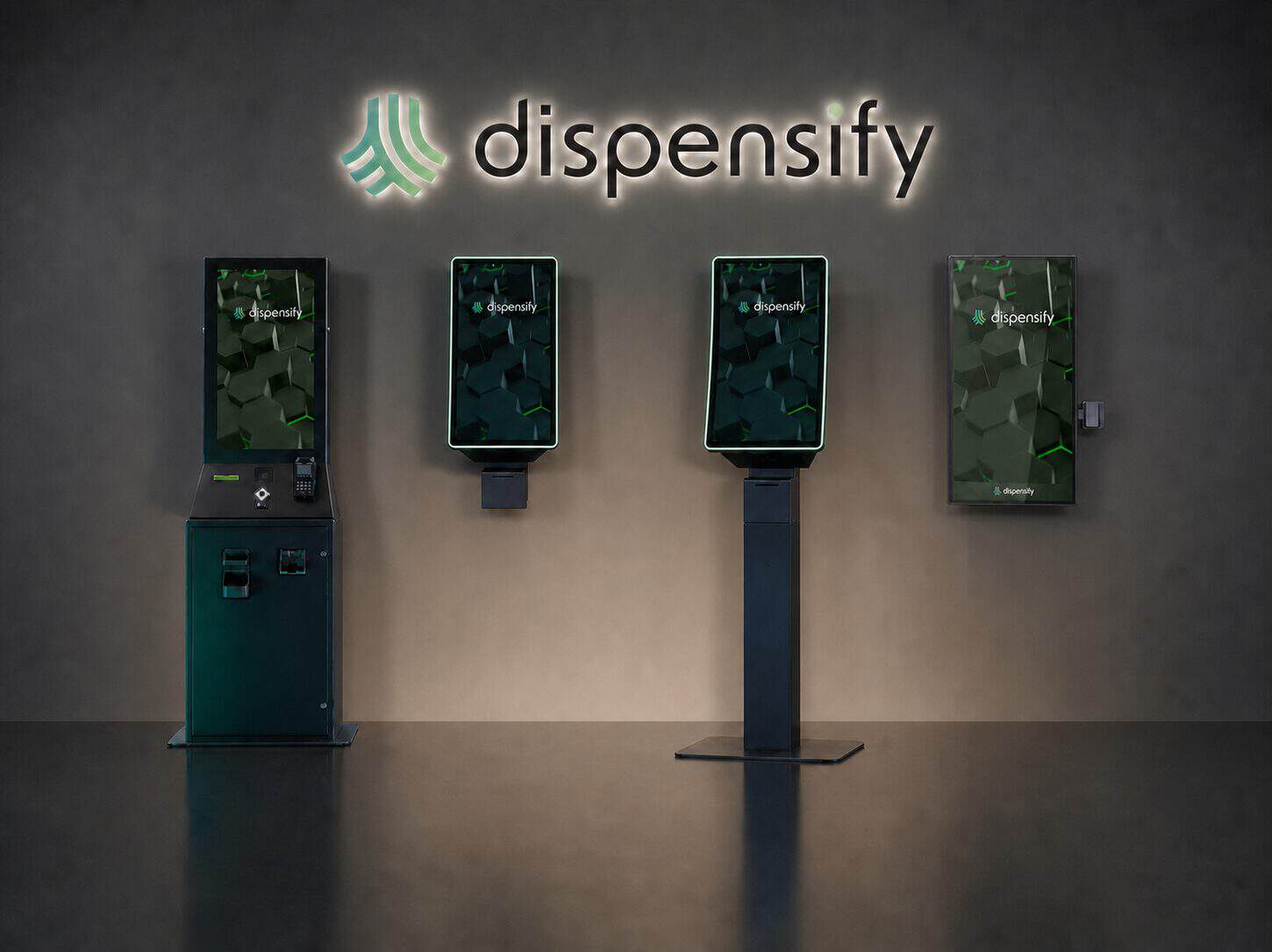 How to Size Self-Service Dispensary Kiosks for Your StoreDo not guess from square footage or buy one kiosk just to test the idea. Use your busiest hour, target self-service share, measured kiosk capacity, floor plan, and fulfillment workflow to size the right number of dispensary kiosks.Read article
 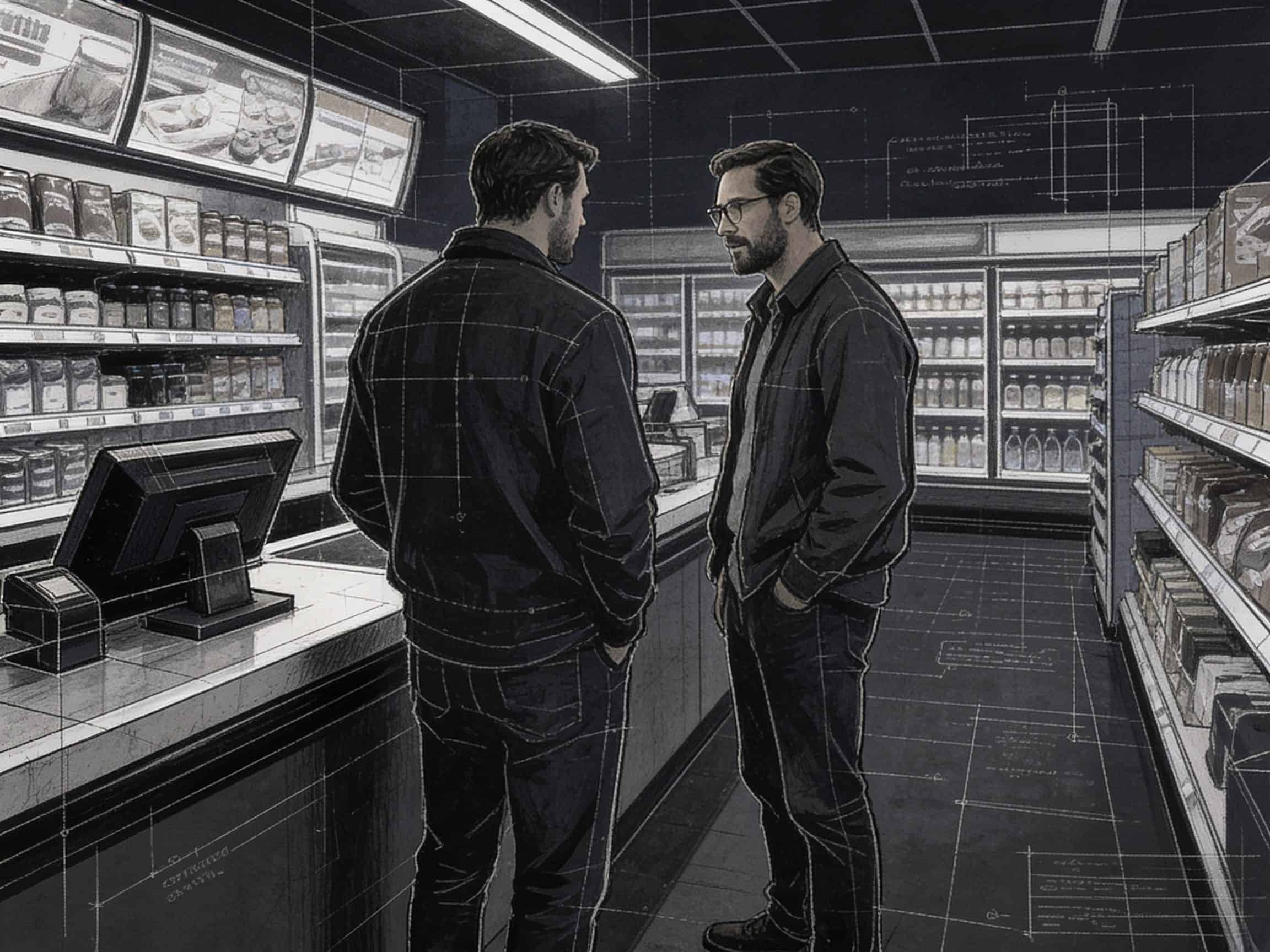 A self-service kiosk isn't replacing your budtenders. It's promoting them.The best stores give customers a choice between the fast lane and a real conversation. One line for everyone isn't a standard, it's a design flaw.Read article
 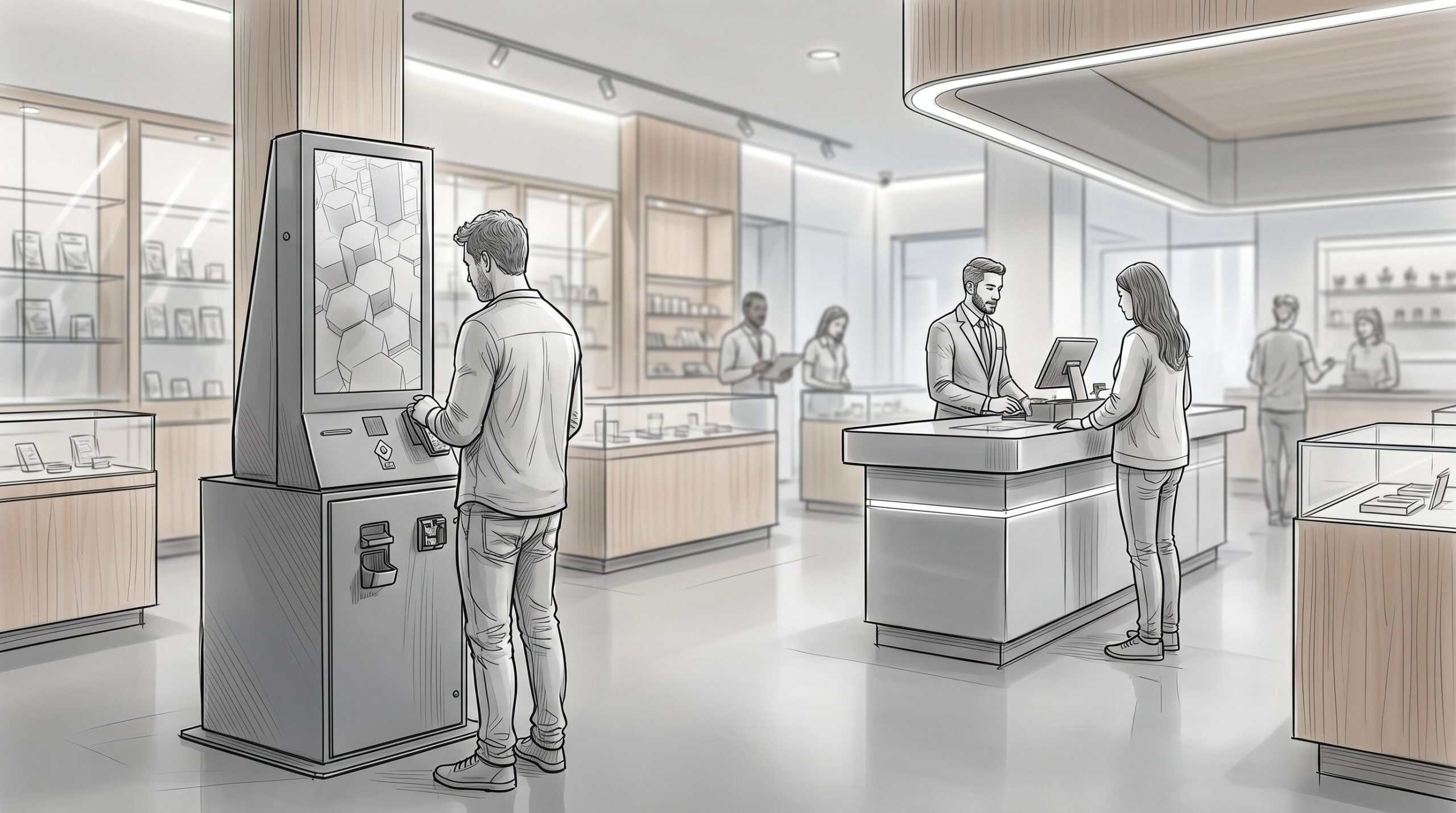 Self-Service Cannabis Kiosks: What Operators Should Know Before They DeploySelf-service is one of the few investments in cannabis retail where the math can be straightforward: shorter lines, larger baskets, and less pressure on the front of house when the Friday rush hits harder than expected.Read article
 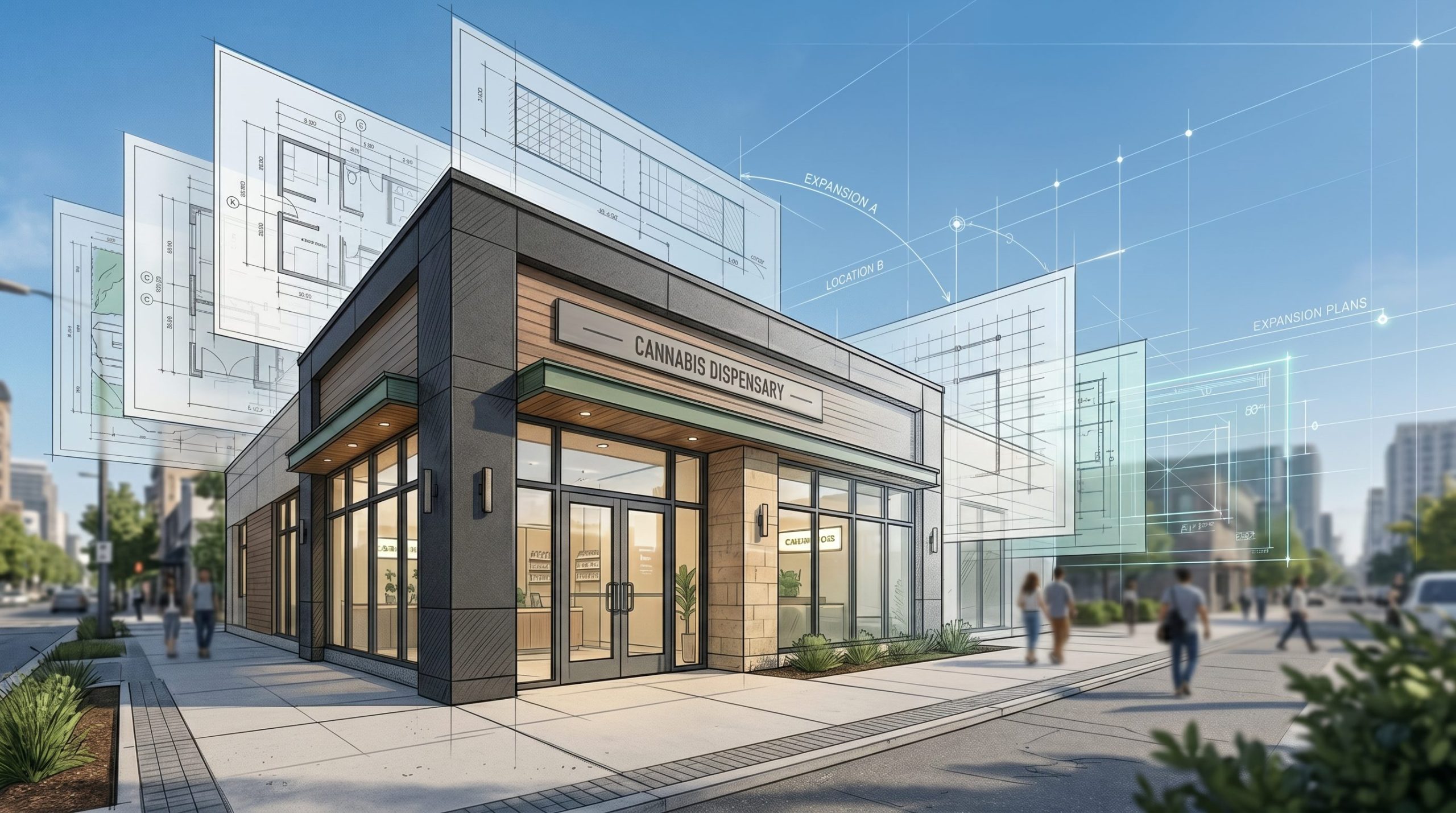 Standardize Checkout, Cash, and Kiosks Across Every LocationMulti-location dispensary operations break at the checkout counter first. POS, scheduling and inventory software scale from one store to ten. The physical lane does not: how customers pay, how cash moves, how ID checks happen and who fixes the hardware on a Saturday are decided store by store unless someone standardizes them.Read article
 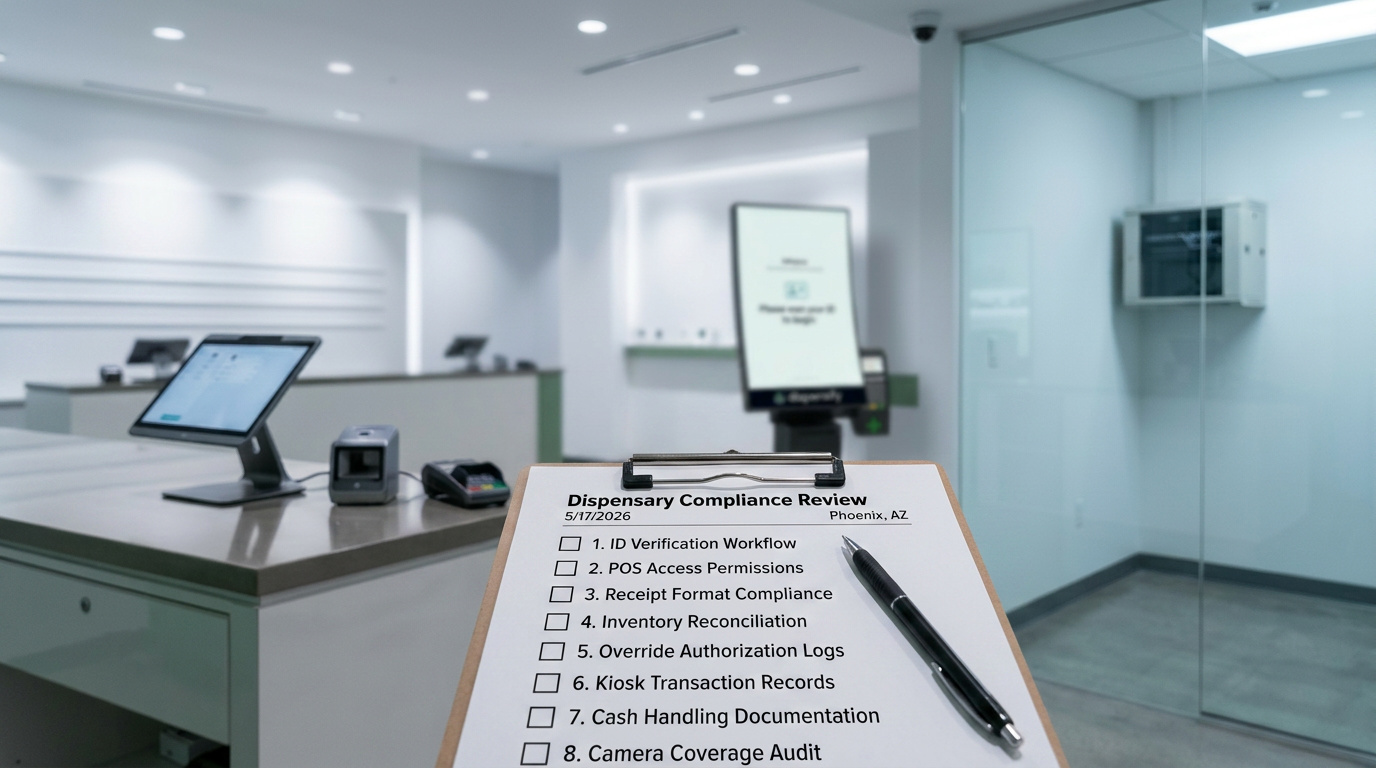 Dispensary Compliance Checklist for POS, Kiosks, and InventoryMost operators think about dispensary compliance as licensing paperwork. The application, the renewals, the annual fees, the state forms with deadlines.Read article