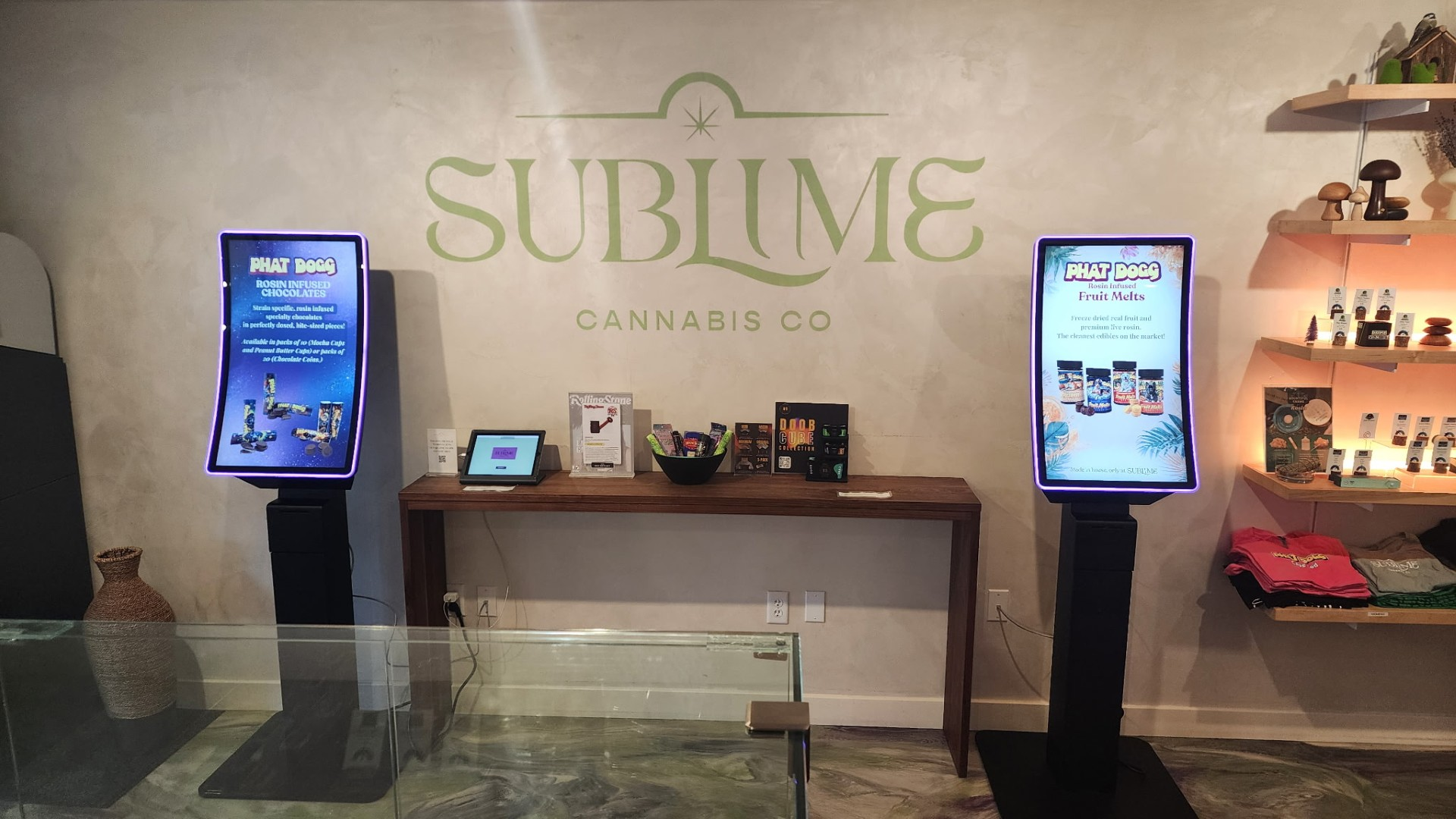
Massachusetts dispensary kiosks and retail hardware.
A practical operator guide for staff-controlled self-service, regulated POS and Metrc workflows, checkout surveillance, retail taxes, and the local approvals that shape a Massachusetts deployment.
Four Massachusetts requirements that shape the checkout lane.
Regulatory note: This page summarizes public guidance reviewed August 10, 2026. Dispensify provides technology planning—not legal, licensing, tax, privacy, or compliance advice or certification. Rules, administrative orders, and municipal requirements can change; confirm current requirements before deployment.
01
Agents inspect ID at entry and checkout
Massachusetts assigns identification inspection to a registered Marijuana Establishment Agent at both entry and the point of sale. A kiosk may assist with a staff-controlled ID workflow, but it does not replace agent inspection or the retailer’s privacy obligations.
The licensed retailer must use a Commission-approved POS, maintain purchase-limit controls, review sales data for manipulation, and separately account for marijuana and non-marijuana sales. Dispensify plans hardware around the retailer’s approved software and procedures; Dispensify does not provide regulatory certification.
Massachusetts licensees use Metrc, while retail reporting may flow through an API, CSV upload, or manual entry. Duplicate sales, incorrect package IDs, and related receipt errors must be corrected in both systems within the required window.
Required surveillance includes sales areas, safes, cash-processing areas, entrances, and exits. Kiosk, POS, and cash-hardware placement should be reviewed with the camera plan and recording-retention requirements before installation.
Sublime Cannabis: hospitality, now with another way to shop.
Sublime Cannabis Co. co-owners Robert Catania and Evan Lehrer installed two Dispensify self-service kiosks powered by Dispensify OS at their Mashpee dispensary, adding an optional in-store self-service ordering path.
Current Commission guidance for retail operations, purchase limits, product mix, and social-consumption planning. Last checked August 10, 2026.
Municipal update
Massachusetts CCC
Commission tracks municipal delivery waivers under the new statewide framework
The Commission published municipal delivery-waiver resources and reported 13 certified local waivers as of July 15, 2026.
Why it matters: Retail, delivery, and technology plans should be checked against the municipality’s current status instead of relying on a statewide assumption.
Retail reforms permit certain prepackaged, shelf-stable food and beverage sales
New rules allow retailers to sell certain prepackaged, shelf-stable, non-cannabis-infused food and beverage items alongside regulated cannabis products.
Why it matters: The POS and receipt workflow must categorize merchandise correctly and keep marijuana and non-marijuana sales separated.
Current adult-use regulations codify the two-ounce purchase limit and equivalencies
The Commission’s June 18 regulations formally incorporate the two-ounce daily purchase limit and specified equivalents first implemented through an April administrative order.
Why it matters: Purchase-limit logic, menus, staff procedures, and POS configuration should follow the current regulations and the retailer’s approved compliance procedures.
Social-consumption implementation continues at the state and municipal level
The Commission said implementation work was continuing while participating cities and towns still needed local opt-in, zoning, and approval steps.
Why it matters: New retail formats still depend on local readiness, approved premises, and a technology plan built around the actual license and workflow.
Questions to answer before choosing hardware in Massachusetts.
01
Where will a registered agent inspect identification at entry and again at the point of sale?
02
Which Commission-approved POS owns purchase limits, receipts, taxes, and the Metrc reporting path?
03
How will marijuana, non-marijuana merchandise, and each applicable tax appear on the receipt?
04
Do cameras cover every sales, cash-processing, entrance, and exit area affected by the new lane?
05
Are the premises, Host Community Agreement or waiver, zoning, and local operating conditions aligned with the deployment?
Massachusetts FAQ
Questions operators ask before they commit to hardware.
What must a Massachusetts retailer confirm before installing a self-service kiosk?
The current sources reviewed do not identify a separate general kiosk license. The retailer must confirm that the deployment operates within its Commission-approved POS, staff-performed ID checks, Metrc reporting, surveillance plan, licensed premises, and applicable municipal requirements.
Can a Massachusetts dispensary kiosk verify age without an employee?
No. A kiosk may assist with a staff-controlled ID workflow, but 935 CMR 500.140 assigns identification inspection to a registered Marijuana Establishment Agent at both entry and the point of sale.
Does a Massachusetts dispensary POS need to work with Metrc?
All licensed establishments report through Metrc. Retail sales may be entered through an API, CSV upload, or manual entry, depending on the retailer’s selected POS and reporting workflow. Dispensify does not claim a direct Metrc integration.
What surveillance applies around dispensary checkout?
Sales and cash-handling areas must be covered by compliant cameras. Recordings generally must remain available for at least the preceding 90 calendar days, or longer when preservation is requested.
What taxes should a Massachusetts cannabis POS handle?
Adult-use sales carry a 10.75% cannabis excise and 6.25% sales tax. A municipality may also impose a local tax of up to 3%. Receipts must separately display the applicable taxes and distinguish marijuana from other goods or services.
What is the current Massachusetts adult-use purchase limit?
The current June 18, 2026 adult-use regulations limit a retail customer to two ounces of marijuana or its specified equivalent per day. Operators should verify the current regulations and their approved procedures before changing POS rules.
Do municipal rules affect dispensary technology deployment?
Yes. Zoning, permits, Host Community Agreements or waivers, and local operating conditions can vary by municipality. Confirm the approved premises and local requirements before finalizing placement, power, data, cameras, or installation.

Official guidance
Massachusetts operator resources.
Last reviewed August 10, 2026. Dispensify provides technology planning and deployment support, not legal or licensing advice. Confirm current requirements with the Massachusetts Cannabis Control Commission, your advisors, and the applicable local authority.
Plan the technology layer for your Massachusetts store
Tell us what you’re opening, replacing, or standardizing. We’ll map the kiosk, POS hardware, cash, installation, and support path around your operating environment.