
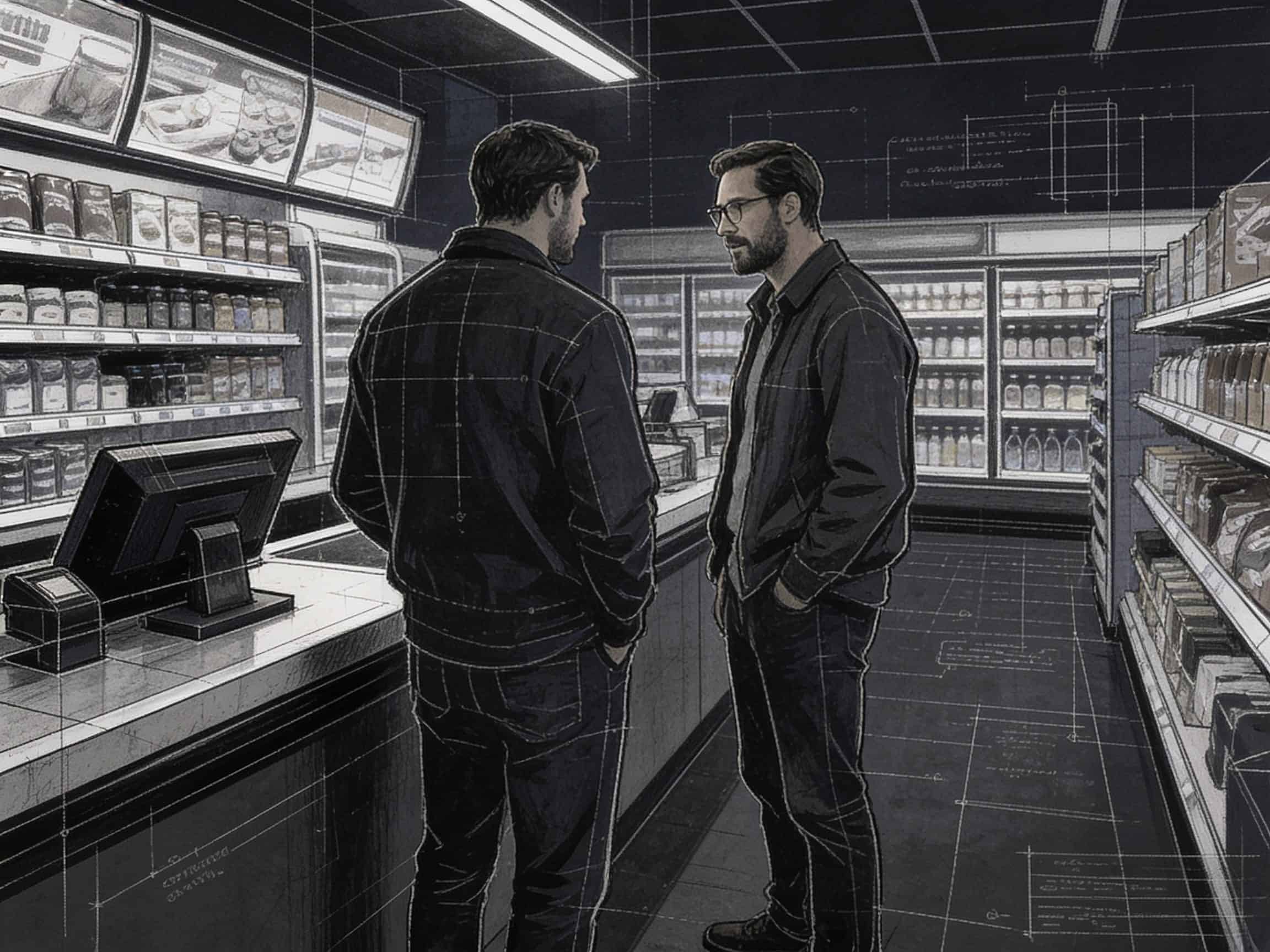
The best stores give customers a choice between the fast lane and a real conversation. One line for everyone isn’t a standard, it’s a design flaw.
I stop at the same gas station every morning on my way to work, but something happened today that hadn’t happend before.
I’ve been stopping here for almost a year and a half. My experience is almost always identical: same routine, same items, same small talk with the same employee, and I’m usually in and out in less than 3 minutes.
Today, there was a different employee working (let’s call him “Ray”). There were 3-4 cars at the pump, two large U-Hauls (they’re a U-Haul pick-up/drop-off), and a few customers wandering around outside.
I walked into a line of three people, Ray, and a woman waiting outside for a U-Haul to be inspected. Ray finished up with a customer and then frantically told the guy at the register and me that he’d be right back.
We both just kind of looked at each other and the guy at the register said, “You’d think they would wait to open up U-Haul until they had at least two employees.”
“I know, I come here every morning before work and always walk right in and out,” I said.
“I wish I could just leave my money and go,” he said, laughing.
We ended up waiting about five minutes, paid, and were on our way. But if I’d been in any more of a rush, I probably would have left.
As I was walking back to my truck, I couldn’t stop thinking about what a missed opportunity it was to not have a self-checkout kiosk at the desk. Most gas stations I go to have one, and I completely skip the line, scan my things and go. Same at the grocery store.
None of this is the employee’s fault
Now, I know what you’re thinking, so let me address it head-on.
None of this is Ray’s fault. He rushed back in, apologized, got us on our way quickly, and was genuinely working hard. I have nothing but respect for that kind of worker. That’s who you want.
But the larger theme here is business strategy, and setting your business and your employees up for success. Ray shouldn’t be in that position. And let’s go a little further and be honest about what just happened. Either a) he rushes through the customers at the counter and keeps them happy at the expense of the U-Haul renter (and maybe loses a repeat customer or earns a bad review), or b) he rushes through the U-Haul inspection (misses something, skips an upsell), and now there’s a potential liability issue and lost revenue.
Both of those are easily avoidable once we accept that not all customers are the same, and we set up checkout accordingly.
And sure, not every company can hire extra people to cover a tiny rush hour that might happen and then carry too many workers the rest of the day. Totally fair, and smart business. But a kiosk? That’s a one-time up-front cost, it’s there when you need it, and it isn’t actively costing a lot when you don’t.
And that’s not an anti-employee argument, because the answer is certainly not replacing every budtender with a kiosk. The two complement each other perfectly. In this scenario, Ray gets to engage with the U-Haul customer without stressing about the line inside, that customer gets a thorough inspection and a good experience (maybe Ray even lands an upsell), and the customers inside get to self-sort by time, need, and tolerance. Everyone wins.
This is already normal everywhere else
These situations are everywhere once you start noticing them. We’ve all walked into a big box store (looking at you, Walmart), needed to find an employee, and just… couldn’t. It’s frustrating. Or you’re at the grocery self-checkout, your ID needs a manual check, and there’s not a person in sight (we solved that one too). All-human or all-kiosk was never the answer. The answer is the intelligent combination of both, built to support your business and, most importantly, your customer experience.
Cannabis is one of the last retail categories still predominantly running everyone through a single type of checkout, and it’s not because the idea doesn’t work. It’s because cash, ID, and compliance made it take a little longer to get here.
Now picture your dispensary
Now picture your shop at 4:45 on a Friday. The lobby’s packed, the line’s ten deep, and your best budtender is patiently walking a brand-new customer through their first edible while eight people behind them just want to grab their usual eighth and go. The new customer feels the pressure. The regulars keep checking the time and glancing at the door. And the sale that quietly walks out because the wait got too long? You’ll never even know it happened. This is exactly what a cannabis self-service kiosk is for. The regular who knows what they want can get a fast, in-and-out checkout, while your budtender gives the first-timer the unhurried attention that turns them into a regular. Some customers need guidance. Some are ready to buy. The best dispensaries will build lanes for both.
The kiosk doesn’t replace your budtender. It promotes them.
Don’t mistake the budtender for the part you can automate. They’re the reason people come back. Not the deals, not the menu, the person. A good one remembers what you bought last time and how you liked it, reads when you’re standing there overwhelmed by a wall of two hundred products, and knows you well enough to steer you away from the thing that’s wrong for you. That’s not a transaction, it’s a relationship, and it can be the most valuable thing on your floor. Every minute your best budtender spends scanning items and counting change for someone who already knew exactly what they wanted is a minute stolen from the thing that actually grows your store. That relationship is the product. Protect it.
What it’s actually worth to you
The customer experience is the front door. Here’s the business case for a self-service kiosk:
- Consistency across every location. For a multi-location operator, a kiosk is the difference between a brand and a handful of shops that each check people out their own way. We can offer the same flow, same upsell, every store.
- You stop losing the rushed customer. The fast lane catches the people who’d otherwise walk out over the wait.
- Your best people get redeployed to where it pays. Same payroll, pointed at selling and service instead of ringing up customers.
- The upsell never gets shy. A kiosk always offers the add-on, without forgetting or feeling awkward about it.
What about compliance?
Fair question, and it’s the cannabis-specific piece. A dispensary self-service kiosk still verifies age and ID at the unit, and your staff of record stays accountable for the sale. The kiosk handles the transaction. It doesn’t handle the law on its own, and it isn’t meant to. It fits inside the rules you already follow, the same way the rest of your floor does.
Frequently asked questions
Do self-service kiosks replace budtenders?
No. A kiosk handles the customers who already know what they want and just want to pay and go, which frees your budtenders to spend real time with the people who want guidance. It promotes your best people, it doesn’t replace them. A side benefit is that the kiosk is still always going to present data-driven, intelligent upsell opportunities, so you gain efficiency without losing upside.
Are dispensary self-service kiosks compliant, and do they check ID?
Yes. A self-service kiosk verifies age and ID right at the unit before checkout, and your staff of record stays accountable for the sale, the same as any other transaction on your floor. It fits inside the rules you already follow.
Do you still have to pay cash at a dispensary with a kiosk?
Not necessarily. Our self-service kiosk can handle cash right at the unit, taking bills and making change so a cash customer isn’t stuck, and it works with the payment methods your store already accepts. Here’s more on our cash-handling kiosk.
What does a dispensary self-service kiosk actually do?
It lets a customer pull up or build their order, verify their ID, pay, and check out on their own, without waiting for a budtender. Think of it as a fast lane running alongside your staff, for the people who’d rather grab their order and go.
Good design isn’t kiosk or budtender. It’s both.
The smartest stores in every category already figured this out. They don’t bet the whole experience on one path. They give the customer who wants speed a fast lane, and they give the customer who wants help a person who’s actually free to help.
At Dispensify, we aren’t selling a replacement for budtenders. We’re freeing them from being permanent cashiers. The balance is imperative, and we don’t think enough people are talking about it.
When you work with us, the kiosk takes the line, and the budtender keeps the relationship.