
Multi-Location Cannabis Dispensary Operations: Standardizing Checkout, Cash, and Kiosk Infrastructure

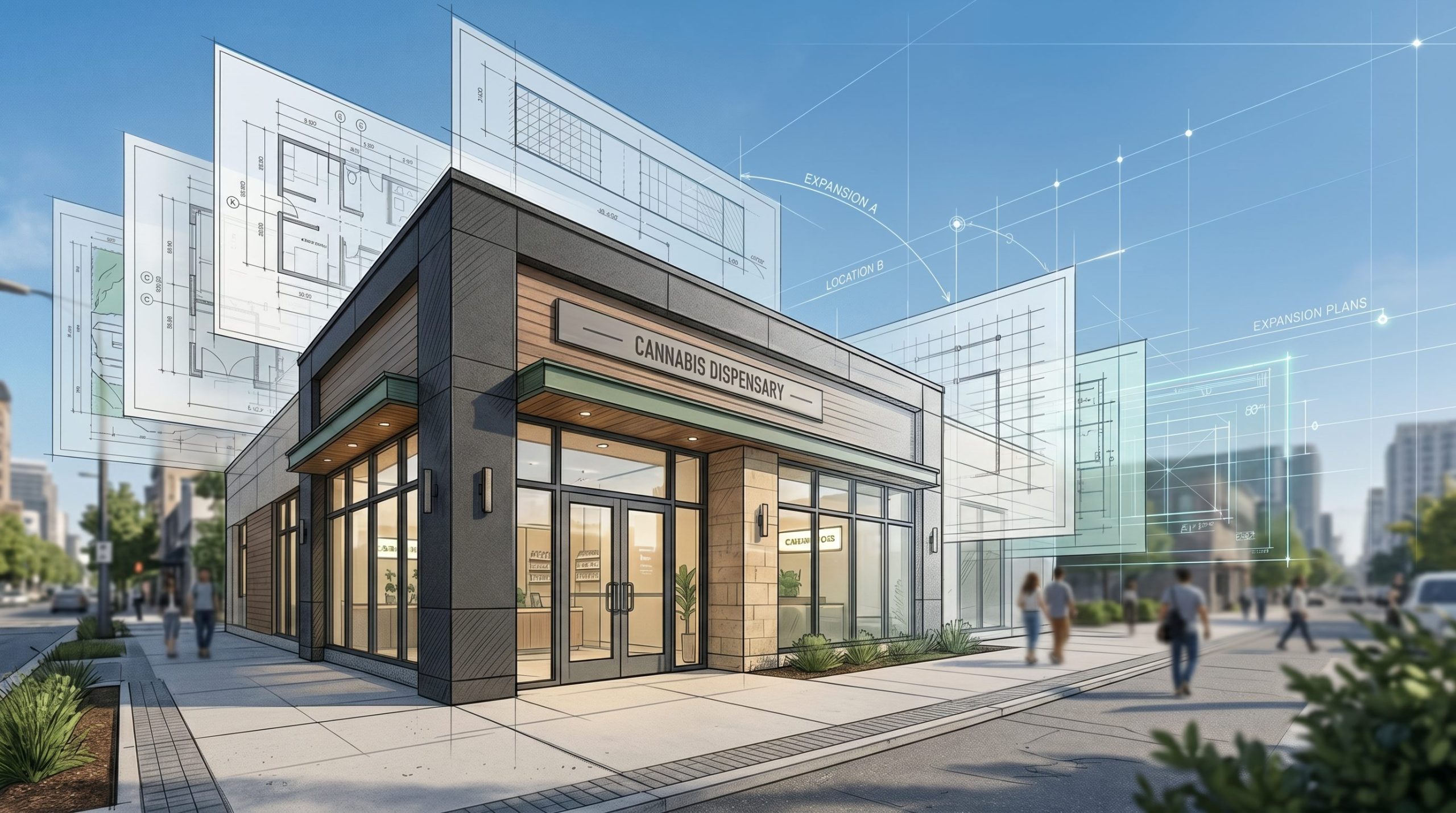
Modern cannabis dispensary storefront with blueprint overlays showing planned multi-location expansion


Scaling from one cannabis dispensary to multiple looks like adding more stores. In reality, it’s a fundamentally different operational model. The systems that work well for one location break under multi-location load. The problem is, most operators don’t realize it until something has already gone wrong.

Most multi-location guides focus on POS software, HR scheduling, or inventory management. Those things matter, but they aren’t the part of the operation that determines whether each store runs efficiently. The part that gets skipped is the physical checkout infrastructure, think: how do customers actually pay? How does cash get handled? How does compliance get enforced at the register? And most important, how does the whole stack stay consistent across locations?

This playbook covers the operational systems that multi-location cannabis operators need, with a focus on the hardware and checkout infrastructure that most guides leave out.

One way to think about this missing layer is the integrated cannabis retail terminal: the physical checkout infrastructure that combines kiosk hardware, cash workflow, scanners, receipts, payment capability, operating software, deployment, and support. Dispensify uses that term because “kiosk” often undersells what multi-location operators actually need. The real question isn’t whether a store has another screen. It’s whether that checkout workflow can run reliably across the footprint.

Why multi-location cannabis dispensary operations are different

Single-location operators optimize one workflow. Multi-location operators standardize across workflows. That sounds like a small distinction. It isn’t.

When one store works well, the operator knows every part of the operation personally. They hired the budtenders, they wrote the cash handling procedure, they spot-check inventory themselves. When that operator opens a second location, the personal-knowledge model breaks immediately. Now the same procedures have to work without the owner standing there enforcing them. The same compliance rules have to be followed by staff the owner may not have trained personally. The same cash handling has to happen repeatably across stores, every shift, every day.

There are categories that need to change at scale: compliance multiplies by state, cash handling multiplies by volume, staff training multiplies by headcount, inventory multiplies by SKU times location, and customer experience multiplies by foot traffic. Every single one of these is solvable for one store and brutal across five.

The operators who scale successfully build multi-location systems from the start. The operators who fail try to scale single-location systems and discover too late that those systems weren’t designed for what they’re now being asked to do.

Why compliance gets harder across locations

Each state has its own compliance regime. METRC versus BioTrack versus state-specific track-and-trace systems. ID verification rules that vary by state and by product type. Purchase limits that change depending on whether the customer is medical or recreational, and depending on the state. Packaging requirements, receipt requirements, age verification, residency rules. The list is longer than most operators expect when they first expand.

A single-location dispensary deals with one set of these rules. An operator in two states deals with two complete sets. A multi-state operator (MSO) in five states deals with five. The complexity doesn’t add. It multiplies.

Most operators try to handle this through staff training and manager oversight. The problem is that compliance failure is silent until it’s not. A budtender misses a purchase limit, a manager fails to catch it, the state audit finds it three months later, and the dispensary is staring at a fine or a license review. By the time it surfaces, the operator has no idea how many other times it happened.

The operators who handle compliance at scale don’t rely on staff memory. They rely on systems and processes that support more consistent compliance workflows at the point of sale. Integrated hardware that supports ID workflows, POS/compliance handoff, compliant receipt workflows, and guardrails that reduce dependence on staff memory. This isn’t a software feature. It’s a hardware and software combination that has to work the same way across the footprint, every shift.

This is where stitched-together tech stacks fail. A dispensary running a kiosk menu on an iPad, a POS on a different system, a scanner from another vendor, and a printer from somewhere else has to make all of those pieces talk to each other correctly. At one location, the operator can manage that. Across five locations, the integration gaps create compliance risk.

Cash handling at multi-location scale

Cannabis is still a heavily cash-based industry. Banking access has improved, payment processing options have expanded, but cash remains a meaningful percentage of dispensary transactions. For a single location, cash handling is hard. Across a chain, it can be operationally brutal.

Are you starting to see the pattern? The problems compound across stores. Cash reconciliation gets done by different managers at different times. Theft risk multiplies with every additional location and every additional employee. Deposit logistics get complicated when multiple stores are sending cash to the same armored car service. Vault management becomes a real operational function rather than a back-office afterthought.

Most chains still handle cash manually. Budtenders count cash at the end of shifts. Managers reconcile the day. The owner reviews discrepancies. Armored car picks up deposits. The whole workflow depends on people doing the same thing the same way across stores. Anyone who has run multi-location retail knows how that goes. It just takes one weak link, one bad day, one tired employee to cause a cascade of larger issues.

The operators who actually solve cash at scale move the workflow into hardware. Cash recyclers and validation systems built into the checkout station handle bills automatically. Reconciliation becomes a software task rather than a person counting at midnight. Theft exposure drops because cash sits inside secure hardware rather than in drawers. Errors drop because the machine doesn’t miscount.

At scale, the economics are pretty straightforward. Consider a five-location operator running ten manual cash registers. Each register requires staff time for counting, reconciliation, deposit prep, and error investigation. Across ten registers, that’s a meaningful weekly labor cost. Replace those manual registers with integrated cash-aware kiosks and the labor cost drops, the error rate drops, and the theft exposure drops. The investment isn’t trivial, but the ongoing operational savings show up every week.

The hardware standardization question

Every expanding operator hits the same question eventually. Do we standardize hardware across locations, or let each store pick what works for them?

The argument for letting each location choose its own setup is that every store is different. Different physical layouts, different traffic patterns, different customer demographics. A flagship store in a major metro has different needs than a smaller store in a secondary market. Why force the same hardware on both?

The argument for standardization is stronger. Training a new budtender at any location is identical when the hardware is the same. Supporting a hardware issue is identical when the hardware is the same. Compliance is supported more consistently when the hardware is the same. Reporting is consistent across locations. Procurement is simpler. Replacement parts are interchangeable. When one piece of equipment fails, the operator doesn’t have to figure out which vendor handles which store.

The successful path most operators land on: standardize the core integrated terminal hardware across the footprint and customize the configuration and floor placement per location. The kiosks themselves are the same. How many of them go in each store, where they sit on the floor, and what specific configuration they run is location-specific.

This is where stitched-together tech stacks hit walls. When the hardware is location-by-location, the software is location-by-location, and the support model is location-by-location, the operator is running five different systems instead of one system with five deployments. The operational overhead is the difference between a chain that scales and a chain that gets stuck.

Self-service checkout at multi-location scale

Single-location dispensaries can usually staff their counter adequately. The owner is involved in hiring, the team is small enough to know personally, and budtender turnover is manageable. Multi-location dispensaries lose all of those advantages.

Every new location adds four to eight new budtender hires, training cycles, scheduling complexity, and turnover risk. In tight labor markets, finding and retaining good budtenders becomes one of the hardest operational problems an MSO faces. Self-service kiosks change the math.

The throughput economics are real. Self-service kiosks can increase peak-hour ordering capacity by moving routine browsing, cart-building, and checkout steps away from the counter. Across multiple locations during peak hours, that difference is the difference between long lines and clean operations.

For an expanding operator, the kiosk investment pays back even faster than for a single store. The capital cost is amortized across higher transaction volume. The headcount reduction is replicated across the footprint. The customer experience improvement (shorter wait, more accurate orders, repeatable transaction flow) shows up across the whole operation, not just one store.

The caveat: self-service only works if the hardware is reliable, the cash handling works across stores, and the support model handles multi-location issues quickly. When a kiosk breaks during peak hours at one location, that’s a problem. A kiosk that breaks the same way across five stores is a crisis. That’s why single-vendor integrated terminals reduce multi-location risk in a way that stitched-together hardware combinations can’t match.

Building the operational stack for multi-location scale

The operational stack a multi-location cannabis operator actually needs:

  1. A POS that supports multi-location reporting, unified inventory across stores, and consistent customer profiles.
  2. Compliance and METRC (or BioTrack, depending on state) integration that supports more consistent workflows at the point of sale.
  3. Cash handling automation, whether kiosk-based or counter-based, but standardized across locations.
  4. Self-service checkout capacity to handle peak hour throughput without scaling budtender headcount linearly.
  5. Hardware that has been tested at scale and is supported by one team that understands the full stack.
  6. Network and IT infrastructure that doesn’t fail when one location loses connectivity.
  7. A training and support model that scales without per-store custom setups.

The decision framework for each layer is build versus buy versus partner. Most operators don’t have the engineering team to build any of this in-house. Most shouldn’t try. The smarter move is to partner with vendors who specialize in the layer and have proven the model at multi-location scale.

Dispensify fits at the integrated cannabis retail terminal layer. Kiosk hardware, Dispensify OS, cash automation, scanners, receipts, EMV payment capability, installation, and multi-location support, all from one team. Works alongside the operator’s POS workflow when integration fit is confirmed. Standardizes the physical checkout layer across the footprint. Reduces the operational risk of stitching a multi-location stack together from separate vendors.

Frequently asked questions

What changes when a cannabis dispensary expands to multiple locations?

A single-location dispensary can rely on direct owner oversight, store-specific habits, and informal staff knowledge. A growing operator needs standardized systems. Checkout, cash handling, compliance workflows, hardware support, staff training, and reporting all have to work the same way across the company without depending on one person being present.

How should multi-location dispensaries standardize checkout infrastructure?

The best approach is usually to standardize the core checkout hardware and workflow, then configure each location based on its floor plan, traffic patterns, and operating needs. That gives operators consistent training, support, reporting, cash handling, and compliance workflows without forcing every store to look identical.

Do multi-location dispensaries need cash automation?

Not every dispensary needs cash automation on day one, but cash handling becomes much harder as locations multiply. Cash recyclers, validators, and cash-aware checkout systems can reduce manual counting, reconciliation errors, theft exposure, and manager workload. The more stores and registers an operator runs, the more valuable cash standardization becomes.

What is an integrated cannabis retail terminal?

An integrated cannabis retail terminal is more than a tablet menu or POS kiosk mode. It combines the physical checkout hardware, touchscreen ordering, scanner, receipt printer, payment capability, cash workflow, operating software, installation, and support model into one store-ready system. For operators with more than one store, the value is consistency across the footprint.

Are self-service kiosks useful for multi-location dispensaries?

Self-service kiosks can help multi-location dispensaries reduce line pressure, standardize ordering workflows, and shift routine browsing or cart-building away from the counter. The key is reliability. A kiosk strategy works best when the hardware, cash workflow, scanners, receipts, POS handoff, and support model are planned as one operational system.

What should MSOs compare before choosing dispensary kiosk hardware?

MSOs should compare more than screen size and software features. Important factors include cash handling, ID and product scanning, receipt printing, payment workflow, POS handoff, network requirements, installation support, replacement parts, staff training, reporting consistency, and who owns support when something breaks during store hours.

The path forward for multi-location cannabis operators

Multi-location cannabis retail operations aren’t single-location operations duplicated. They’re a different operational model that requires different systems. The operators who scale successfully build for that model from day one. The operators who struggle are usually trying to scale single-location habits across more stores.

The integrated terminal layer (kiosks, cash, scanners, receipts, payment, support) is one of the highest-leverage places to standardize. It supports more consistent compliance workflows, reduces cash handling labor, increases throughput during peak hours, and gives the operator one support team to call when something breaks in a store.

Based on public competitor pages we reviewed, we haven’t found another cannabis kiosk provider showing the same combination in one operating model: purpose-built kiosk hardware, specialized OS designed to fit around existing POS workflows, scanner, receipt printer, EMV payment capability, cash-and-coin recycling, installation, and support.

Dispensify works with cannabis operators and MSOs to deploy purpose-built integrated cannabis retail terminals across their footprint. The hardware is standardized across stores, configured to each store’s physical and operational needs, and supported by one team.

If you’re planning a multi-location rollout or trying to standardize hardware across stores you already operate, Dispensify can help map the operational fit for your specific deployment plan.

Scaling from one cannabis dispensary to multiple looks like adding more stores. In reality, it’s a fundamentally different operational model. The systems that work well for one location break under multi-location load. The problem is, most operators don’t realize it until something has already gone wrong.

Most multi-location guides focus on POS software, HR scheduling, or inventory management. Those things matter, but they aren’t the part of the operation that determines whether each store runs efficiently. The part that gets skipped is the physical checkout infrastructure, think: how do customers actually pay? How does cash get handled? How does compliance get enforced at the register? And most important, how does the whole stack stay consistent across locations?

This playbook covers the operational systems that multi-location cannabis operators need, with a focus on the hardware and checkout infrastructure that most guides leave out.

One way to think about this missing layer is the integrated cannabis retail terminal: the physical checkout infrastructure that combines kiosk hardware, cash workflow, scanners, receipts, payment capability, operating software, deployment, and support. Dispensify uses that term because “kiosk” often undersells what multi-location operators actually need. The real question isn’t whether a store has another screen. It’s whether that checkout workflow can run reliably across the footprint.

Why multi-location cannabis dispensary operations are different

Single-location operators optimize one workflow. Multi-location operators standardize across workflows. That sounds like a small distinction. It isn’t.

When one store works well, the operator knows every part of the operation personally. They hired the budtenders, they wrote the cash handling procedure, they spot-check inventory themselves. When that operator opens a second location, the personal-knowledge model breaks immediately. Now the same procedures have to work without the owner standing there enforcing them. The same compliance rules have to be followed by staff the owner may not have trained personally. The same cash handling has to happen repeatably across stores, every shift, every day.

There are categories that need to change at scale: compliance multiplies by state, cash handling multiplies by volume, staff training multiplies by headcount, inventory multiplies by SKU times location, and customer experience multiplies by foot traffic. Every single one of these is solvable for one store and brutal across five.

The operators who scale successfully build multi-location systems from the start. The operators who fail try to scale single-location systems and discover too late that those systems weren’t designed for what they’re now being asked to do.

Why compliance gets harder across locations

Each state has its own compliance regime. METRC versus BioTrack versus state-specific track-and-trace systems. ID verification rules that vary by state and by product type. Purchase limits that change depending on whether the customer is medical or recreational, and depending on the state. Packaging requirements, receipt requirements, age verification, residency rules. The list is longer than most operators expect when they first expand.

A single-location dispensary deals with one set of these rules. An operator in two states deals with two complete sets. A multi-state operator (MSO) in five states deals with five. The complexity doesn’t add. It multiplies.

Most operators try to handle this through staff training and manager oversight. The problem is that compliance failure is silent until it’s not. A budtender misses a purchase limit, a manager fails to catch it, the state audit finds it three months later, and the dispensary is staring at a fine or a license review. By the time it surfaces, the operator has no idea how many other times it happened.

The operators who handle compliance at scale don’t rely on staff memory. They rely on systems and processes that support more consistent compliance workflows at the point of sale. Integrated hardware that supports ID workflows, POS/compliance handoff, compliant receipt workflows, and guardrails that reduce dependence on staff memory. This isn’t a software feature. It’s a hardware and software combination that has to work the same way across the footprint, every shift.

This is where stitched-together tech stacks fail. A dispensary running a kiosk menu on an iPad, a POS on a different system, a scanner from another vendor, and a printer from somewhere else has to make all of those pieces talk to each other correctly. At one location, the operator can manage that. Across five locations, the integration gaps create compliance risk.

Cash handling at multi-location scale

Cannabis is still a heavily cash-based industry. Banking access has improved, payment processing options have expanded, but cash remains a meaningful percentage of dispensary transactions. For a single location, cash handling is hard. Across a chain, it can be operationally brutal.

Are you starting to see the pattern? The problems compound across stores. Cash reconciliation gets done by different managers at different times. Theft risk multiplies with every additional location and every additional employee. Deposit logistics get complicated when multiple stores are sending cash to the same armored car service. Vault management becomes a real operational function rather than a back-office afterthought.

Most chains still handle cash manually. Budtenders count cash at the end of shifts. Managers reconcile the day. The owner reviews discrepancies. Armored car picks up deposits. The whole workflow depends on people doing the same thing the same way across stores. Anyone who has run multi-location retail knows how that goes. It just takes one weak link, one bad day, one tired employee to cause a cascade of larger issues.

The operators who actually solve cash at scale move the workflow into hardware. Cash recyclers and validation systems built into the checkout station handle bills automatically. Reconciliation becomes a software task rather than a person counting at midnight. Theft exposure drops because cash sits inside secure hardware rather than in drawers. Errors drop because the machine doesn’t miscount.

At scale, the economics are pretty straightforward. Consider a five-location operator running ten manual cash registers. Each register requires staff time for counting, reconciliation, deposit prep, and error investigation. Across ten registers, that’s a meaningful weekly labor cost. Replace those manual registers with integrated cash-aware kiosks and the labor cost drops, the error rate drops, and the theft exposure drops. The investment isn’t trivial, but the ongoing operational savings show up every week.

The hardware standardization question

Every expanding operator hits the same question eventually. Do we standardize hardware across locations, or let each store pick what works for them?

The argument for letting each location choose its own setup is that every store is different. Different physical layouts, different traffic patterns, different customer demographics. A flagship store in a major metro has different needs than a smaller store in a secondary market. Why force the same hardware on both?

The argument for standardization is stronger. Training a new budtender at any location is identical when the hardware is the same. Supporting a hardware issue is identical when the hardware is the same. Compliance is supported more consistently when the hardware is the same. Reporting is consistent across locations. Procurement is simpler. Replacement parts are interchangeable. When one piece of equipment fails, the operator doesn’t have to figure out which vendor handles which store.

The successful path most operators land on: standardize the core integrated terminal hardware across the footprint and customize the configuration and floor placement per location. The kiosks themselves are the same. How many of them go in each store, where they sit on the floor, and what specific configuration they run is location-specific.

This is where stitched-together tech stacks hit walls. When the hardware is location-by-location, the software is location-by-location, and the support model is location-by-location, the operator is running five different systems instead of one system with five deployments. The operational overhead is the difference between a chain that scales and a chain that gets stuck.

Self-service checkout at multi-location scale

Single-location dispensaries can usually staff their counter adequately. The owner is involved in hiring, the team is small enough to know personally, and budtender turnover is manageable. Multi-location dispensaries lose all of those advantages.

Every new location adds four to eight new budtender hires, training cycles, scheduling complexity, and turnover risk. In tight labor markets, finding and retaining good budtenders becomes one of the hardest operational problems an MSO faces. Self-service kiosks change the math.

The throughput economics are real. Self-service kiosks can increase peak-hour ordering capacity by moving routine browsing, cart-building, and checkout steps away from the counter. Across multiple locations during peak hours, that difference is the difference between long lines and clean operations.

For an expanding operator, the kiosk investment pays back even faster than for a single store. The capital cost is amortized across higher transaction volume. The headcount reduction is replicated across the footprint. The customer experience improvement (shorter wait, more accurate orders, repeatable transaction flow) shows up across the whole operation, not just one store.

The caveat: self-service only works if the hardware is reliable, the cash handling works across stores, and the support model handles multi-location issues quickly. When a kiosk breaks during peak hours at one location, that’s a problem. A kiosk that breaks the same way across five stores is a crisis. That’s why single-vendor integrated terminals reduce multi-location risk in a way that stitched-together hardware combinations can’t match.

Building the operational stack for multi-location scale

The operational stack a multi-location cannabis operator actually needs:

  1. A POS that supports multi-location reporting, unified inventory across stores, and consistent customer profiles.
  2. Compliance and METRC (or BioTrack, depending on state) integration that supports more consistent workflows at the point of sale.
  3. Cash handling automation, whether kiosk-based or counter-based, but standardized across locations.
  4. Self-service checkout capacity to handle peak hour throughput without scaling budtender headcount linearly.
  5. Hardware that has been tested at scale and is supported by one team that understands the full stack.
  6. Network and IT infrastructure that doesn’t fail when one location loses connectivity.
  7. A training and support model that scales without per-store custom setups.

The decision framework for each layer is build versus buy versus partner. Most operators don’t have the engineering team to build any of this in-house. Most shouldn’t try. The smarter move is to partner with vendors who specialize in the layer and have proven the model at multi-location scale.

Dispensify fits at the integrated cannabis retail terminal layer. Kiosk hardware, Dispensify OS, cash automation, scanners, receipts, EMV payment capability, installation, and multi-location support, all from one team. Works alongside the operator’s POS workflow when integration fit is confirmed. Standardizes the physical checkout layer across the footprint. Reduces the operational risk of stitching a multi-location stack together from separate vendors.

Frequently asked questions

What changes when a cannabis dispensary expands to multiple locations?

A single-location dispensary can rely on direct owner oversight, store-specific habits, and informal staff knowledge. A growing operator needs standardized systems. Checkout, cash handling, compliance workflows, hardware support, staff training, and reporting all have to work the same way across the company without depending on one person being present.

How should multi-location dispensaries standardize checkout infrastructure?

The best approach is usually to standardize the core checkout hardware and workflow, then configure each location based on its floor plan, traffic patterns, and operating needs. That gives operators consistent training, support, reporting, cash handling, and compliance workflows without forcing every store to look identical.

Do multi-location dispensaries need cash automation?

Not every dispensary needs cash automation on day one, but cash handling becomes much harder as locations multiply. Cash recyclers, validators, and cash-aware checkout systems can reduce manual counting, reconciliation errors, theft exposure, and manager workload. The more stores and registers an operator runs, the more valuable cash standardization becomes.

What is an integrated cannabis retail terminal?

An integrated cannabis retail terminal is more than a tablet menu or POS kiosk mode. It combines the physical checkout hardware, touchscreen ordering, scanner, receipt printer, payment capability, cash workflow, operating software, installation, and support model into one store-ready system. For operators with more than one store, the value is consistency across the footprint.

Are self-service kiosks useful for multi-location dispensaries?

Self-service kiosks can help multi-location dispensaries reduce line pressure, standardize ordering workflows, and shift routine browsing or cart-building away from the counter. The key is reliability. A kiosk strategy works best when the hardware, cash workflow, scanners, receipts, POS handoff, and support model are planned as one operational system.

What should MSOs compare before choosing dispensary kiosk hardware?

MSOs should compare more than screen size and software features. Important factors include cash handling, ID and product scanning, receipt printing, payment workflow, POS handoff, network requirements, installation support, replacement parts, staff training, reporting consistency, and who owns support when something breaks during store hours.

The path forward for multi-location cannabis operators

Multi-location cannabis retail operations aren’t single-location operations duplicated. They’re a different operational model that requires different systems. The operators who scale successfully build for that model from day one. The operators who struggle are usually trying to scale single-location habits across more stores.

The integrated terminal layer (kiosks, cash, scanners, receipts, payment, support) is one of the highest-leverage places to standardize. It supports more consistent compliance workflows, reduces cash handling labor, increases throughput during peak hours, and gives the operator one support team to call when something breaks in a store.

Based on public competitor pages we reviewed, we haven’t found another cannabis kiosk provider showing the same combination in one operating model: purpose-built kiosk hardware, specialized OS designed to fit around existing POS workflows, scanner, receipt printer, EMV payment capability, cash-and-coin recycling, installation, and support.

Dispensify works with cannabis operators and MSOs to deploy purpose-built integrated cannabis retail terminals across their footprint. The hardware is standardized across stores, configured to each store’s physical and operational needs, and supported by one team.

If you’re planning a multi-location rollout or trying to standardize hardware across stores you already operate, Dispensify can help map the operational fit for your specific deployment plan.

Multi-Location Cannabis Dispensary Operations: